Case Report
Abstract
Full TextPDF Introduction: Patients with multiple myeloma (MM) have improved life expectancy and quality of life in the last decade with the introduction of new chemotherapeutic agents and improvement in treatment modalities. Due to this, patients are now being treated for surgical implications of the disease, which was not possible earlier.
Case Report: We report a case of a 42-year male with MM with fractured femur bone posted for fixation of pathological fracture femur, discussing the perioperative considerations and management for anaesthesiologists.
Conclusion: Proper anaesthetic management is crucial for the successful fixation of pathological fractures in patients with MM and comorbidities, considering the unique challenges posed by the disease and its associated complications.
Letter to the Editor
Full TextPDF
Clinical Image
Full TextPDF
Research Article
Abstract
Full TextPDF
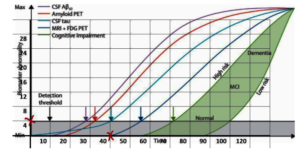
Supplementary File Introduction: Several hypotheses explain the onset and pathology of Alzheimer’s disease (AD), such as the amyloid hypothesis and the tau hypothesis. Consequently, various biomarkers have been identified and drugs developed, but the fight against the AD epidemic is still ongoing. Perhaps it is time to explore new hypotheses. To begin with, researchers have shown that neuropathology associated with AD typically starts to develop decades before the clinical onset or manifestation of the disease. However, therapeutic interventions are still being designed to address mild-to-moderate stages of the disease, which are unfortunately irreversible.
Methods: We have reviewed various mathematical models to identify any missing parameters that could support the proposed time factor hypothesis for AD. In addition, we have developed a cognitive function algorithm that utilizes the identified parameters. The algorithm’s results are used to predict the likelihood of neuritic dystrophy.
Results: With mathematical evidence, we emphasize the importance of timely diagnosis of AD and provide support for considering an earlier age of 30 years (rather than 60 years or older) for effective interventions, including diagnosis and drug development.
Discussion: Among other points, we showed that Aβ42 aggregation starts around age 30–40 years. With this information, we propose the need to re-engineer the concepts behind the science of AD. The number of AD patients will experience a nose dive if effort aimed at timely prevention of (for instance) Aβ42 aggregation is expended.
Case Report
Abstract
Full TextPDF Background: This case emphasizes the atypical presentation of Ramsay Hunt syndrome (RHS), in which the rash was distributed over cervical dermatomes (C3, C4).
Case Presentation: A 55-year-old Sudanese woman presented with left-side mouth deviation and difficulty in the closure of her right eye which happened two weeks after the appearance of a vesicular rash over the right side of her head, ear, down to the right side of her neck as well as submandibular area, and improved with treatment (acyclovir and prednisolone).
Conclusion: Physicians should be aware of typical and atypical presentations of RHS to facilitate prompt diagnosis and provide appropriate management. Early intervention with antiviral and corticosteroids has been shown to significantly improve outcomes in these patients.
Case Report
Abstract
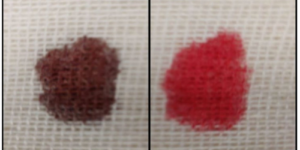
Full TextPDF Incidences of sodium nitrite poisoning have frequently increased in the last few years with the wide, easy availability of the drug and the increase in suicidal tendencies in the population. Sodium nitrite is widely used as a food preservative and in treating cyanide toxicity. It is a powerful oxidizing agent, which oxidizes hemoglobin to methemoglobin, reducing the oxygen-carrying capacity of erythrocytes and causing tissue hypoxia. Patients with sodium nitrite toxicity present to emergency with hypotension, cyanosis, hypoxia, altered consciousness, dysrhythmia, and cardiac arrest. We report a case of a suicide survivor who presented with an intentional fatal overdose of sodium nitrite in an 18-year-old female by drinking approximately one tablespoon of sodium nitrite in a suicidal attempt. Upon arrival at the emergency department (ED), the patient was hypotensive, cyanotic, and cyanosis non-responsive to oxygen therapy. Hospital professionals should consider sodium nitrite toxicity in patients with a suspected overdose who present with a cyanotic appearance and pulse oximetry that remains around 85% despite oxygen and dark brown blood seen on venipuncture. Prompt diagnosis is crucial to start early treatment.
Case Report
Abstract
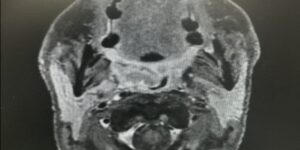
Full TextPDF Neuroendocrine tumors of the head and neck region are extremely infrequent. Small cell neuroendocrine carcinoma (NEC) of the tonsil is almost unheard of and carries a poor prognosis. There is no standard treatment protocol with regard to this tumor type. We present a 74-year-old male with complaints of odynophagia and swelling on the right side of the neck for one month. Physical examination showed a right neck level II lymph node with an ulceroproliferative mass involving the (R) tonsillar fossa, uvula, soft palate, and obstructing the oropharynx. MRI showed a right tonsillar mass measuring 3.4 × 3.3 × 1.4 cm with an ipsilateral level II lymph node measuring 2.7 × 1.9 cm. PET-CT scan showed a metabolically active right tonsillar lesion with a right level II lymph node. Histopathological examination revealed small cell NEC. On immunohistochemistry, tumor cells were strongly positive for PanCK, synaptophysin, chromogranin, CD56, and p16. Tumor cells were negative for CD45, CK7, CK20, and EBV-LMP. Ki-67 was 80%. The patient was treated with cisplatin and etoposide-based chemotherapy, and the tumor showed a very good response.
Research Article
Abstract
Full TextPDF The effect of chemotherapy on the menstrual cycle changes of patients who have undergone cancer treatment, mainly for breast cancer, was studied. For comparison, patients with nasopharyngeal, leukemia, buccal mucosa, and tongue cancers were also included in the study. The average age of the patients was 38. For breast cancer patients, the treatment was mostly a combination of doxorubicin, cyclophosphamide, and docetaxel or paclitaxel. Trastuzumab was also used in combination with other drugs for some patients. Appropriate treatments were given to patients with other cancers. This preliminary study was done with a group of 25 patients. Amenorrhea (stoppage of menses) was observed for about 75% of patients. For those patients for whom menses was restarted, it occurred after 1, 4, or 12 months after complete cessation of chemotherapy. No clear differentiation was observed for breast cancer vs. other cancer patients in the stoppage or restarting of menses with chemotherapy. Induction of amenorrhea after the chemotherapeutic intervention can be considered as a clear indication that the drugs are working as expected. Since the observation was made in patients of child-bearing age, the information could be used for counseling similar patients about the possibility of infertility and teratogenicity associated with chemotherapy. This preliminary study shows that the changes in menstrual characteristics upon chemotherapy in South Indian women are like those reported for the Western population. Induction of amenorrhea and resumption of menses after termination of the chemotherapy, the key parameters evaluated in this study, showed similar trends in both populations.
Research Article
Abstract
Full TextPDF Background: During the last decades, many studies have explored social support, pain self-efficacy, and health beliefs in older adults with musculoskeletal disorders.
Aim: The purpose of the research is to investigate the beliefs of elderly people with musculoskeletal disorders regarding social support, self-efficacy in pain, and health locus of control.
Methods: The research was carried out based on 3 questionnaires. The first questionnaire involved the Multidimensional Scale of Perceived Social Support, the second involved the Pain Self Efficacy Questionnaire, and the third included the Multidimensional Health Locus of Control (MHLC) scale. The research was conducted from April–June 2023 among 106 elderly people, of which 32 (30.2%) were men and 74 (69.8%) were women, members of long-term care services and others who visited the Open Care Center of Patras.
Results: The mean age of the participants was 76.1 years and the majority were females, primary school graduates, and retired. Furthermore, most of them had moderate/mild manual labor, average financial status, and received medication for musculoskeletal problems. The results showed that there is a statistically significant positive correlation between pain self-efficacy and the support from the significant others (r = .370, p < .01), family support (r = .517, p < .01), overall social support (r = .435, p < .01), and financial status (r = .353, p < .01).
Conclusion: The research showed that social support is positively related to pain self-efficacy in the elderly with musculoskeletal diseases.
Research Article
Abstract
Full TextPDF The present study investigated how the consequences of telecommuting depend on the personality characteristics of employees. The hypothesis is that extroverted people will have more difficulties distancing themselves from the workplace and shifting work to home and thus high levels of burnout. It was also hypothesized that individuals with high levels of neuroticism would experience more burnout symptoms. The research involved 133 people who answered a questionnaire of demographic factors, the Eysenck personality questionnaire (EPQ) short form to determine extroversion and introversion and neuroticism, and the Maslach Burnout Inventory (MBI). The first hypothesis was not confirmed, as the results of the research showed that extroversion is negatively associated with burnout and therefore introversion is associated with more burnout symptoms. The second hypothesis was confirmed by demonstrating that neuroticism is positively correlated with burnout. Multiple regression showed extraversion as the most significant predictor of reduced burnout symptoms but showed no gender differences in burnout. In addition, it appeared that those with a higher academic education presented more emotional exhaustion and depersonalization which are indicators of burnout, but also more personal achievements which is an indicator of reduced burnout compared to those who were high school/IEK/KEK graduates. Even those with improved financial situation compared to 3 years ago presented more personal achievements.