Case Report
Abstract
Full TextPDF Purpose: To describe the case of a uniocular patient with advanced primary open-angle glaucoma (POAG) and age-related cataract in the right eye and microphthalmic left eye.
Methods: A 73-year-old one-eyed man presented with four years of painless, progressive dimness of vision in the right eye. The vision was 6/18 in the right eye, whereas the left eye had no light perception (NLP). In the left eye, severe ptosis and microphthalmos were detected, while the right eye had age-related cataracts, an open anterior chamber angle, intraocular pressure (IOP) of 30 mmHg, and progressive glaucomatous optic neuropathy.
The IOP was dropped to 22 mmHg after a topical timolol maleate (0.5%), brimonidine tartrate (0.2%), and brinzolamide (1%). As the patient had mature cataract, advanced glaucomatous optic nerve damage, target IOP was not reached, and adherence issues with antiglaucoma medications (AGM), the decision was made to proceed with cataract extraction combined with augmented trabeculectomy with mitomycin-C (MMC).
Results: There were no intraoperative complications. Over one year, the IOP was maintained in the 12–14 mmHg range without AGM.
Conclusion: In advanced glaucoma patients, combined phaco-trabeculectomy operations can considerably lower IOP and drug load or compliance concerns with antiglaucoma drugs. This case represented an efficient and safe surgical technique for uniocular advanced POAG, particularly in a developing country like Bangladesh.
Research Article
Abstract
Full TextPDF Background: Clinical and diagnostic challenges are due to the result of a variable presentation of neonatal sepsis and bloodstream infections (BSIs) and uncertain disease epidemiology in children below five years of age. Although the criteria for achieving an adequate blood culture specimen in adults have been well described, there is much more equivocation in the pediatric population, especially for the under-five-year age group. Therefore, the present study is designed to evaluate the etiological profile of BSI among under-five children by the automated BACTEC systems.
Materials and Methods: All blood culture samples received in the Department of Microbiology for culture falling in the age group were included in the study for a period of one year from 01 July 2015 to 30 June 2016 using the BD BACTEC FX except in the exclusion criteria. The blood culture was observed in the BD BACTEC FX system for at least five days before being reported as sterile.
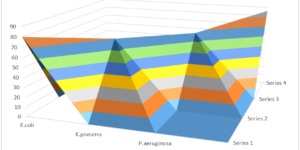
Results: A total of 1533 samples in the age group of < 5 years and suspected of BSIs were received in the Department of Microbiology, Indira Gandhi Medical College (IGMC), Shimla. Among them, 963 (62.8%) were males, while 570 (37.2%) were females. Among the total of 1533 samples, 604 (39.40%) were found positive in culture, 898 (58.57%) were negative, and 31 (2.02%) were contaminants. Among the 604 positive cases, 390 (64.6%) were men, while 214 (35.4%) were women. S. aureus was the highest among the gram-positive isolates 98 (16.22%), followed by coagulase-negative Staphylococcus, group B Streptococcus, and S. pneumoniae. Among the gram-negative organisms, E. coli 80 (13.24%) was isolated mostly followed by K. pneumoniae 70 (11.58%), P. aeruginosa 68 (11.25%), Salmonella typhi 50 (8.27%), Citrobacter koseri 18 (2.98%), Acinetobacter baumannii 12 (1.98%) and a group of organisms without fermentation 86 (14.23%).
Conclusion: There was quite high positivity in culture in the preschool group. Positivity was significantly high in males as compared to females. It is essential to administer appropriate and synergistic antimicrobial agents empirically early and appropriately for treating children under five-year age with BSI.
Case Report
Abstract
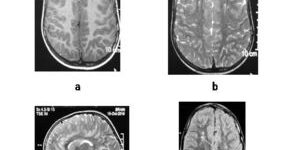
Full TextPDF Subacute sclerosing panencephalitis (SSPE) is a neurodegenerative disease caused by persisting measles virus (MeV) in the central nervous tissue of the patients. About one in ten thousand children who contract the infection in early childhood develop SSPE. Fulminant SSPE is a rare disease with fatal consequences. Magnetic resonance imaging (MRI) can help in making a diagnosis, but all the possible changes encompassing all stages and their correlation with severity are yet to be described. We report a case of fulminant SSPE with unusual findings on MRI, which led to great difficulty and delay in making the correct diagnosis.
Review Article
Abstract
Full TextPDF Chronic diseases, such as childhood diabetes mellitus (DM), are a challenge for sick children and their families. Paediatric DM is characterized by a complex therapeutic management treatment, which has a physical and psychological effect on the whole family and entails multiple losses for the parents. Investigators point out that parents of children with DS react to the diagnosis with anger, denial, frustration, and depression and that mothers differ in their reactions from fathers. The teenager goes through a very intense period of his life, full of emotional tensions and outbursts, anger, sorrow, fear, and shame for his desires, thoughts, and himself. Thus, a disease in the period of adolescence is very likely to harm the adolescent's self-image and negatively affect body image and perception of strength and ability. For this reason, the investigations carried out in the context of this field are necessary to focus not only on the needs of the children but also on those of their parents, as this is how it can be achieved better control. Despite all the difficulties in the management of the chronic disease of their child, it seems that the families of diabetic children adequately respond to the demands of intensive care and probably manage satisfactorily the psychological, social, and physical levels of their child's chronic illness.
Research Article
Abstract
Full TextPDF Background: Over the last few years, the use of potassium bromate in bread has been the subject of many scientific arguments in Libya. The Food and Drug Control Center in Libya banned the use of potassium bromate in bread on account of its deleterious effect and carcinogenicity in humans. However, the current research presents conflicting results on its use in bread.
Aim: This study aimed to examine the knowledge and increase awareness among the population about the use of this substance in bread. In addition, it looked at some aspects of bread making in bakeries.
Methods: A cross-sectional study was conducted on the general population during the period from Feb 2021 to May 2021. An electronic questionnaire was designed using Google Forms and distributed through social media.
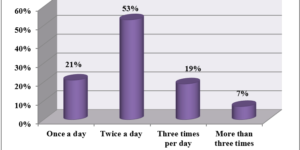
Results: A total of 500 participants responded to the electronic survey and were included in this study. 79% females and 21% males with an age range from 20–30 years. The majority of participants were from Benghazi (92%) and Libyan nationality (97%). 76% did not have any health problems, whereas 24% had some diseases. 50% of them consumed bread twice a day. Only 12% of participants had awareness about the Libyan standard for bread making, while half of them (51%) did have any knowledge, and about 38% of them did not know any information about these standards. Most of the participants (71%) did have any information about potassium bromate as a food additive. Only 31% of participants reported that potassium bromate is a banned substance, whereas around half of them (52%) did not know that. Most of the participants (65%) did not know the effects of potassium bromate on their health. The majority of them suggested that the health inspection office, municipal guard, and the Ministry of Economy have the responsibility of monitoring the use of food additives in the bakery.
Conclusion: This study highlights the low level of knowledge of respondents regarding food additives, especially potassium bromate. Education programs to increase awareness among people are highly recommended. Further scientific investigations are needed.
Research Article
Abstract
Full TextPDF Recently, there is a huge interest in the use of the Self-Efficacy for Appropriate Medication Use Scale (SEAMS) to evaluate perceived medication adherence across cultures. The aim of the present study was the translation as well as the cultural adaptation of the Greek version of the SEAMS. In this study, 10 patients diagnosed with end-stage kidney disease (ESKD) undergoing hemodialysis participated. The whole process included the steps of translation - back translation and semantic evaluation. The scale indicated very satisfactory acceptance of the translated version of the instrument, which participants considered easy to understand. After completing the process of the translation as well as the cultural adaptation in Greece, the SEAMS will be available to Greek researchers in order to measure self-efficacy for appropriate medication use as well as to compare results from Greece to those coming from other cultures, where the tool has already been validated.
Short Communication
Abstract
Full TextPDF Point-of-care ultrasound (POCUS) is an essential tool for medical assistance in all scenarios and specialties. In this paper, the main uses of POCUS in otolaryngology and head and neck surgery are described.