Review Article
Abstract
Full TextPDF Cancer registries play a central role in the documentation of cancer information. Over the past few decades, the data quality of cancer registries has been the subject of considerable debate among healthcare planners and has received increasing attention among epidemiologists. This is because of the importance of cancer registries' data in health services planning, and epidemiological research. Cancer registries are responsible for collecting the basic demographic and disease information of every patient diagnosed with cancer and producing high-quality cancer statistics. The quality of cancer registry data is evaluated using different techniques to improve the registration process, completeness, and accuracy. This review aims to describe the quality of cancer registration as reported in the literature, highlighting the effect of the completeness and accuracy of cancer data on survival estimates. A limited number of studies have looked at the quality of cancer data. The existing literature indicated several limitations on the quality of cancer data that influence the estimates of cancer survival and contribute to international variations of cancer survival between countries. This effect could make survival estimates either underestimated or overestimated. No specific data field was reported to be responsible for the change in survival estimate. However, the importance of some clinical fields, such as clinical stages and treatments, has been highlighted in pieces of literature. Survival statistics based on cancer registries were also affected by the presence of death certificate only (DCO) registrations. Complete and accurate data are crucial for obtaining reliable results and valid inferences in oncology research.
Systematic Review
Abstract
Full TextPDF
Supplementary File People who have celiac disease (CD) are probably more likely to have thyroid disorders. A comprehensive systematic review and meta-analysis were conducted to assess the link between thyroid disorders and CD. Articles were selected from PubMed, Web of Science, Scopus, Ovid, Embase, Cochrane, ProQuest, and Wiley from February 2022 and earlier. A meta-analysis was conducted to evaluate the outcomes, using odds ratios (ORs) and corresponding 95% confidence intervals (95% CIs). The meta-analysis comprised 31 articles with 3310256 participants including 101253 individuals with thyroid disorders. Overall, the frequency of thyroid disease was notably higher in patients with CD compared to the control groups (OR: 3.06, 95% CI: 2.51 – 3.72, P<0.001). The findings of our meta-analysis support the notion that patients with CD are more likely to have autoimmune thyroid disease (ATD) and other thyroid disorders than the control group, thus indicating that regular screening for thyroid disease is necessary for CD patients. Further cohort research is required to investigate the relationship between thyroid disorders and CD.
Case Series
Abstract
Full TextPDF Introduction: Tuberculosis (TB) in Mexico is considered an endemic public health problem. Infection in adults is caused 95% of the time by Mycobacterium tuberculosis (Mtb). Although non-invasive diagnostic techniques are the first choice, the diagnostic yield of these techniques does not always allow definitive diagnosis, so sometimes, surgical biopsy is necessary.
Objective: To describe two cases of pleural TB with a difficult diagnosis in which non-invasive diagnostic tests were inconclusive.
Conclusion: In the presence of pleural or pulmonary nodules or tumors, we should consider TB as a differential diagnosis, as well as in those patients whose clinical suspicion is high and non-invasive methods have not been diagnostic. Therefore, the surgical approach is still an option for these patients.
Case Report
Abstract
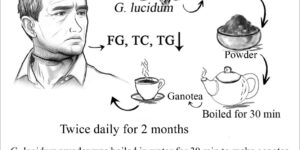
Full TextPDF Ganoderma lucidum (L) is considered an effective medicinal mushroom. The main goal of this research was to investigate whether the beneficial effects of G. lucidum found in various in vitro or animal studies can be translated to chronic metabolic diseases such as diabetes in humans. Here, we present a case study of a person with diabetes after treatment with G. lucidum and provide important information on fasting blood glucose (FG) levels, glycated hemoglobin (HbA1c), lipid profile, and various other blood parameters. After taking G. lucidum hot water extract for three months, FG levels decreased from 198 mg/dL to 177.3 mg/dL. HbA1c fell by 1.5%. Serum total cholesterol (TC) decreased from 210 to 170 mg/dL, and triglyceride (TG) levels decreased from 220 to 150 mg/dL, while serum high-density cholesterol (HDL-C) increased from 25 to 35 mg/dL. Low-density cholesterol (LDL-C) only decreased by 9 mg/dL. Serum creatinine, alkaline phosphatase (ALP), alanine aminotransferase (ALT), and total bilirubin levels were not changed. Therefore, it is concluded that G. lucidum hot water extract had antidiabetic and antidyslipidemic effects without affecting hepatorenal functions.
Research Article
Abstract
Full TextPDF Background and Purpose: The pharmacotherapy options in patients with gestational diabetes mellitus (GDM) are insulin or oral antihyperglycemic agents. Insulin is the preferred medication for treating hyperglycemia, but in recent years, metformin has been increasingly used in the treatment of GDM.
Aim: The aim is to assess the efficacy of different treatments (insulin and metformin) in women with GDM.
Methods: Screening for GDM was performed in 2422 pregnant women and revealed GDM in 119 women [75 g oral glucose tolerance test (OGTT) was performed at 24–28 weeks of gestation]. All patients started treatment at 24–29 weeks of gestation. The patients were divided into two groups (Gr.): Gr. 1 had 68 patients treated with diet and insulin therapy. Gr. 2 had 51 patients treated with diet and metformin.
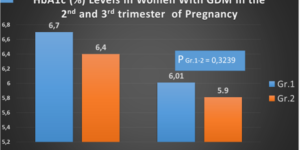
Results: In the 2nd trimester, HbA1c (%) levels for Gr. 1 and Gr. 2 were 6.7 (0.05) and 6.4 (0.6), respectively. By term, HbA1c levels statistically decreased in both groups, but we did not find a statistical difference between the groups. Women from Gr. 2 gained less weight compared to Gr. 1 (1.89 ± 3.88 vs. 4.53 ± 3.67 kg; P = 0.003). In Gr. 1, the percentage of preeclampsia was 2.9%, and in Gr. 2, 3.9% (P = 0.7773, OR - 1.33). We did not find a statistical difference between the groups. The incidence of preterm delivery before 37 weeks of gestation in Gr. 1 was lower than in Gr. 2 (P = 0.7311, OR - 1.33), and we also did not find a statistical difference between the groups. Perinatal mortality was observed in Gr. 1 - 1.4% and in Gr. 2 - 1.9% (P = 0.8402, OR - 1.33). In both groups, we observed a high percentage of cesarean section (Gr. 1 - 32.3% and Gr. 2 - 29.4% (P = 0.7651, OR -1.0909), but we did not find a statistical difference between the groups. In both groups, the percentage of macrosomia was high, despite good glycemic control maintained through pregnancies: 20.0% and 23.0% for Gr. 1 and Gr. 2, respectively (P = 0.9236, OR - 1.0256), and again no statistical difference was found between the groups. Percent of neonatal hypoglycemia was lower in Gr. 2 (1.9%) than in Gr. 1 (4.41%) (P = 0.9236, OR – 1.0256). Percent of respiratory distress syndrome was 2.94% and 3.92% for Gr. 1 and Gr. 2, respectively (P = 0.9694, OR - 0.9893), with no statistical difference between the groups.
Conclusion: We did not find differences between patients treated with diet and insulin therapy and patients treated with diet and metformin. The percentage of preeclampsia, preterm delivery, macrosomia, and perinatal death were similar in both groups; only maternal weight gain was lower in the metformin group.
Case Report
Abstract
Full TextPDF We report the case of a female patient with a histologic diagnosis of chromophobe renal cell carcinoma (ChRCC) after a left laparoscopic radical nephrectomy. Due to the unusual histologic diagnosis, a genetic test was ordered identifying tuberous sclerosis disease.
Systematic Review
Abstract
Full TextPDF Background: With the demanding nature of their work, healthcare professionals often face challenges that can affect their overall well-being. Understanding the factors that affect their quality of life is crucial to developing effective interventions and support systems.
Aim: The present systematic review investigated the relationship between quality of life, fatigue, and social support among healthcare professionals during the COVID-19 pandemic.
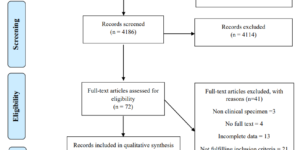
Methods: The search for studies included in the study was performed using four online databases: PubMed, Embase, Scopus, and Web of Science. The search was limited to articles published in English between January 1, 2020 and March 31, 2023. In total, 14 articles were included in the systematic review.
Results: The findings of this work showed a negative correlation between fatigue and quality of life in health professionals, as well as a positive correlation between social support and quality of life. Furthermore, it was found that the increased social support of healthcare professionals during the period of COVID-19 is associated with a better quality of professional life.
Conclusion: It seems that higher levels of social support are associated with lower levels of anxiety and depression among health professionals.