Research Article
Abstract
Full TextPDF Background and Purpose: The pharmacotherapy options in patients with gestational diabetes mellitus (GDM) are insulin or oral antihyperglycemic agents. Insulin is the preferred medication for treating hyperglycemia, but in recent years, metformin has been increasingly used in the treatment of GDM.
Aim: The aim is to assess the efficacy of different treatments (insulin and metformin) in women with GDM.
Methods: Screening for GDM was performed in 2422 pregnant women and revealed GDM in 119 women [75 g oral glucose tolerance test (OGTT) was performed at 24–28 weeks of gestation]. All patients started treatment at 24–29 weeks of gestation. The patients were divided into two groups (Gr.): Gr. 1 had 68 patients treated with diet and insulin therapy. Gr. 2 had 51 patients treated with diet and metformin.
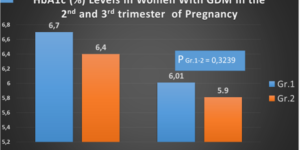
Results: In the 2nd trimester, HbA1c (%) levels for Gr. 1 and Gr. 2 were 6.7 (0.05) and 6.4 (0.6), respectively. By term, HbA1c levels statistically decreased in both groups, but we did not find a statistical difference between the groups. Women from Gr. 2 gained less weight compared to Gr. 1 (1.89 ± 3.88 vs. 4.53 ± 3.67 kg; P = 0.003). In Gr. 1, the percentage of preeclampsia was 2.9%, and in Gr. 2, 3.9% (P = 0.7773, OR - 1.33). We did not find a statistical difference between the groups. The incidence of preterm delivery before 37 weeks of gestation in Gr. 1 was lower than in Gr. 2 (P = 0.7311, OR - 1.33), and we also did not find a statistical difference between the groups. Perinatal mortality was observed in Gr. 1 - 1.4% and in Gr. 2 - 1.9% (P = 0.8402, OR - 1.33). In both groups, we observed a high percentage of cesarean section (Gr. 1 - 32.3% and Gr. 2 - 29.4% (P = 0.7651, OR -1.0909), but we did not find a statistical difference between the groups. In both groups, the percentage of macrosomia was high, despite good glycemic control maintained through pregnancies: 20.0% and 23.0% for Gr. 1 and Gr. 2, respectively (P = 0.9236, OR - 1.0256), and again no statistical difference was found between the groups. Percent of neonatal hypoglycemia was lower in Gr. 2 (1.9%) than in Gr. 1 (4.41%) (P = 0.9236, OR – 1.0256). Percent of respiratory distress syndrome was 2.94% and 3.92% for Gr. 1 and Gr. 2, respectively (P = 0.9694, OR - 0.9893), with no statistical difference between the groups.
Conclusion: We did not find differences between patients treated with diet and insulin therapy and patients treated with diet and metformin. The percentage of preeclampsia, preterm delivery, macrosomia, and perinatal death were similar in both groups; only maternal weight gain was lower in the metformin group.
Case Report
Abstract
Full TextPDF We report the case of a female patient with a histologic diagnosis of chromophobe renal cell carcinoma (ChRCC) after a left laparoscopic radical nephrectomy. Due to the unusual histologic diagnosis, a genetic test was ordered identifying tuberous sclerosis disease.
Systematic Review
Abstract
Full TextPDF Background: With the demanding nature of their work, healthcare professionals often face challenges that can affect their overall well-being. Understanding the factors that affect their quality of life is crucial to developing effective interventions and support systems.
Aim: The present systematic review investigated the relationship between quality of life, fatigue, and social support among healthcare professionals during the COVID-19 pandemic.
Methods: The search for studies included in the study was performed using four online databases: PubMed, Embase, Scopus, and Web of Science. The search was limited to articles published in English between January 1, 2020 and March 31, 2023. In total, 14 articles were included in the systematic review.
Results: The findings of this work showed a negative correlation between fatigue and quality of life in health professionals, as well as a positive correlation between social support and quality of life. Furthermore, it was found that the increased social support of healthcare professionals during the period of COVID-19 is associated with a better quality of professional life.
Conclusion: It seems that higher levels of social support are associated with lower levels of anxiety and depression among health professionals.
Case Report
Abstract
Full TextPDF Introduction: Patients with multiple myeloma (MM) have improved life expectancy and quality of life in the last decade with the introduction of new chemotherapeutic agents and improvement in treatment modalities. Due to this, patients are now being treated for surgical implications of the disease, which was not possible earlier.
Case Report: We report a case of a 42-year male with MM with fractured femur bone posted for fixation of pathological fracture femur, discussing the perioperative considerations and management for anaesthesiologists.
Conclusion: Proper anaesthetic management is crucial for the successful fixation of pathological fractures in patients with MM and comorbidities, considering the unique challenges posed by the disease and its associated complications.
Research Article
Abstract
Full TextPDF
Supplementary File Introduction: Several hypotheses explain the onset and pathology of Alzheimer’s disease (AD), such as the amyloid hypothesis and the tau hypothesis. Consequently, various biomarkers have been identified and drugs developed, but the fight against the AD epidemic is still ongoing. Perhaps it is time to explore new hypotheses. To begin with, researchers have shown that neuropathology associated with AD typically starts to develop decades before the clinical onset or manifestation of the disease. However, therapeutic interventions are still being designed to address mild-to-moderate stages of the disease, which are unfortunately irreversible.
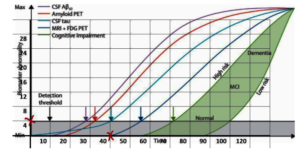
Methods: We have reviewed various mathematical models to identify any missing parameters that could support the proposed time factor hypothesis for AD. In addition, we have developed a cognitive function algorithm that utilizes the identified parameters. The algorithm’s results are used to predict the likelihood of neuritic dystrophy.
Results: With mathematical evidence, we emphasize the importance of timely diagnosis of AD and provide support for considering an earlier age of 30 years (rather than 60 years or older) for effective interventions, including diagnosis and drug development.
Discussion: Among other points, we showed that Aβ42 aggregation starts around age 30–40 years. With this information, we propose the need to re-engineer the concepts behind the science of AD. The number of AD patients will experience a nose dive if effort aimed at timely prevention of (for instance) Aβ42 aggregation is expended.
Case Report
Abstract
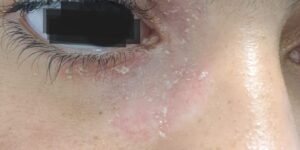
Full TextPDF Background: This case emphasizes the atypical presentation of Ramsay Hunt syndrome (RHS), in which the rash was distributed over cervical dermatomes (C3, C4).
Case Presentation: A 55-year-old Sudanese woman presented with left-side mouth deviation and difficulty in the closure of her right eye which happened two weeks after the appearance of a vesicular rash over the right side of her head, ear, down to the right side of her neck as well as submandibular area, and improved with treatment (acyclovir and prednisolone).
Conclusion: Physicians should be aware of typical and atypical presentations of RHS to facilitate prompt diagnosis and provide appropriate management. Early intervention with antiviral and corticosteroids has been shown to significantly improve outcomes in these patients.
Case Report
Abstract
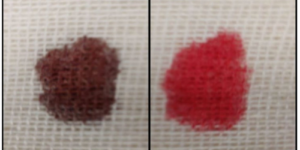
Full TextPDF Incidences of sodium nitrite poisoning have frequently increased in the last few years with the wide, easy availability of the drug and the increase in suicidal tendencies in the population. Sodium nitrite is widely used as a food preservative and in treating cyanide toxicity. It is a powerful oxidizing agent, which oxidizes hemoglobin to methemoglobin, reducing the oxygen-carrying capacity of erythrocytes and causing tissue hypoxia. Patients with sodium nitrite toxicity present to emergency with hypotension, cyanosis, hypoxia, altered consciousness, dysrhythmia, and cardiac arrest. We report a case of a suicide survivor who presented with an intentional fatal overdose of sodium nitrite in an 18-year-old female by drinking approximately one tablespoon of sodium nitrite in a suicidal attempt. Upon arrival at the emergency department (ED), the patient was hypotensive, cyanotic, and cyanosis non-responsive to oxygen therapy. Hospital professionals should consider sodium nitrite toxicity in patients with a suspected overdose who present with a cyanotic appearance and pulse oximetry that remains around 85% despite oxygen and dark brown blood seen on venipuncture. Prompt diagnosis is crucial to start early treatment.