
Full Text
Series of Clinical and Biomedical Research
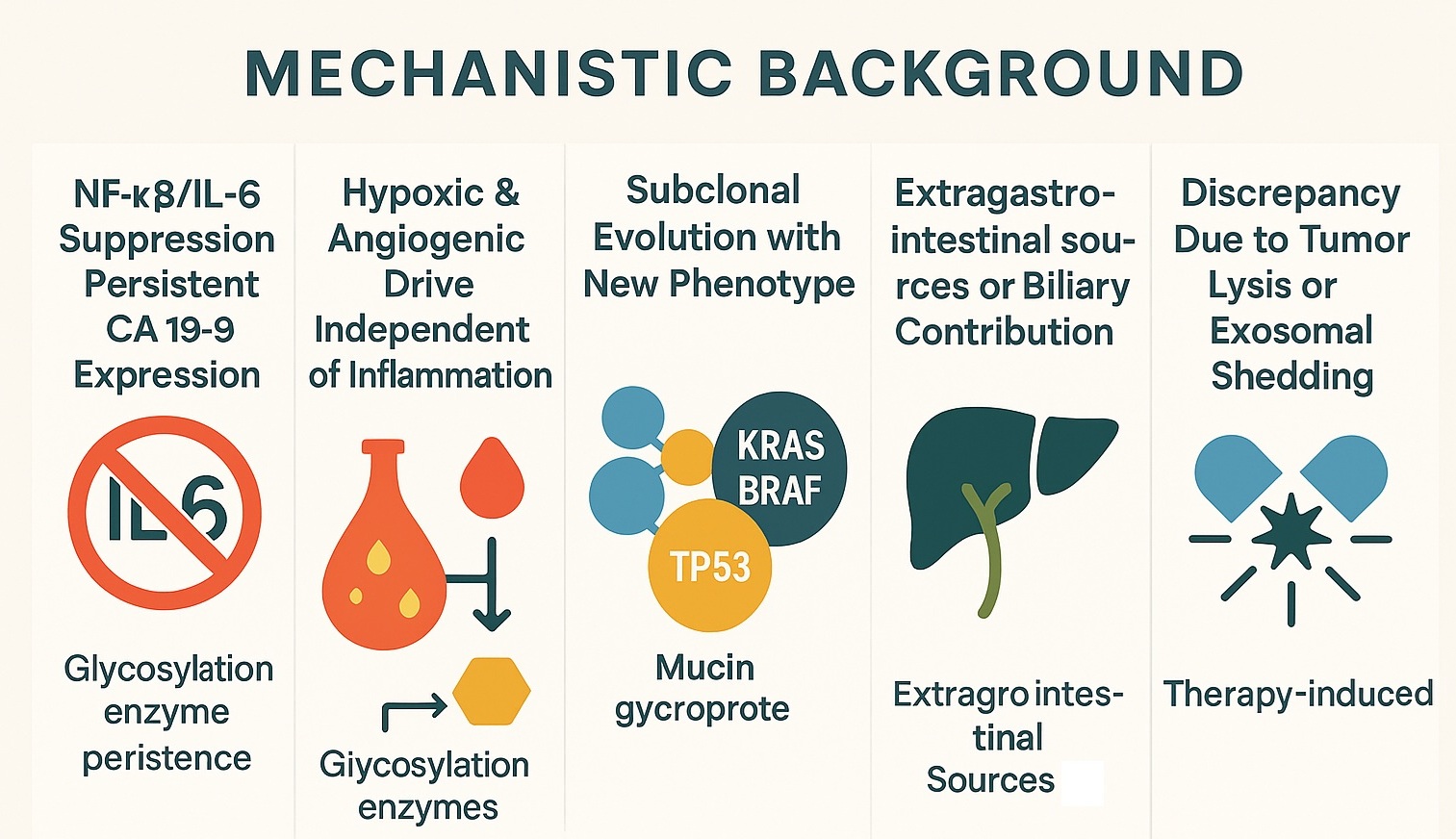
Discrepant Dynamics of CA 19-9 and IL-6 in Colorectal Cancer: Mechanistic Rationale and a Practical Workup
Tavartkiladze A*, Reiter RJ, Lou R, Kasradze D, Okrostsvaridze N, Revazishvili P, Maisuradze M, Andronikashvili I, Nozadze P, Jinchveladze D, Tavartkiladze L, Khutsishvili R and Potskhoraia T
Tavartkiladze A, Reiter RJ, Lou R, et al. Discrepant dynamics of CA 19-9 and IL-6 in colorectal cancer: mechanistic rationale and a practical workup. Series Clin Biomed Res. 2025;2(SI):1-12.
Carbohydrate antigen 19-9 (CA 19-9) can rise in subsets of colorectal cancer (CRC), most prominently in mucinous phenotypes and tumors that elaborate secreted mucin glycoproteins, even when inflammatory cytokines such as interleukin 6 (IL-6) are normal or declining. Here, we expand the mechanistic rationale for this biomarker discordance and convert it into a concise, testable clinical workflow. First, CA 19-9 expression reflects the sialyl Lewis^a (sLe^a) epitope carried on mucins such as MUC1/MUC5AC; once the underlying glycosylation machinery is engaged (e.g., FUT3 and ST3Gal-III), biosynthesis can continue despite suppression of NF-κB/STAT3-linked inflammatory signaling, yielding persistent antigen shedding even as IL-6 falls. Second, hypoxia and angiogenic drive provide an inflammation-independent route to heightened mucin production: stabilization of HIF-1α and induction of VEGF promote glycoprotein synthesis and increase cellular turnover in hypoxic niches, augmenting CA 19-9 release without elevating systemic cytokines. Third, subclonal evolution can generate phenotypic decoupling; emergent KRAS/BRAF/TP53-altered clones may display a mucin-high, inflammation-low program, producing rising CA 19-9 while IL-6 remains quiescent. Fourth, extratumoral sources, especially cholestasis, biliary obstruction, or cholangitis, raise CA 19-9 independent of cancer activity and must be considered whenever imaging is stable. Fifth, effective therapy can transiently elevate CA 19-9 via tumor lysis or exosome-mediated shedding even as overall inflammatory tone declines, creating short-lived spikes that should be interpreted in a temporal context.
Operationally, we propose an imaging anchored algorithm that integrates molecular and biochemical stratification. The trigger is a verified CA 19-9 rise with low/normal IL-6. Step 1: perform contrast CT/MRI to assess for new or enlarging lesions and add ultrasound/MRCP when symptoms or cholestatic laboratory values suggest a biliary contribution. Step 2a (progression present): obtain circulating tumor DNA (ctDNA) to detect emergent KRAS/BRAF/TP53 subclones and, when clinically appropriate, escalate toward targeted or combination therapy while continuing to track CA 19-9, CEA, and ctDNA response. Step 2b (no radiographic progression): evaluate the hepatobiliary tree with bilirubin, alkaline phosphatase, γ-glutamyltransferase, and ultrasound/MRCP; treat obstruction or inflammation and repeat markers after resolution. If biliary evaluation is negative, Step 3: deploy a stratification panel, MUC1/MUC5AC expression, FUT3/ST3Gal-III activity, and hypoxia/angiogenesis markers (HIF-1α, VEGF), to document an inflammation-independent mucin/glycan drive; integrate conventional markers (CEA, LDH-A, β2-microglobulin) to contextualize tumor burden. Finally, reassess trends after any therapeutic change to distinguish true progression from treatment transient release.
This framework clarifies three common scenarios: (A) subclone driven progression (new lesions plus positive ctDNA) warranting escalation despite low IL-6; (B) biliary confounding (stable imaging with cholestatic tests) prompting biliary management and deferred oncologic change; and (C) therapy related transients (post treatment CA 19-9 spikes with improving imaging and falling IL-6) best managed by continued monitoring. Overall, rising CA 19-9 with low IL-6 is biologically coherent and clinically interpretable when framed by mucin biology, hypoxia, clonal dynamics, and hepatobiliary physiology. The proposed stepwise algorithm, imaging first; ctDNA when progression; biliary tests when stable; optional mucin/glycosylation/hypoxia profiling; iterative reassessment, aims to prevent misinterpretation of isolated CA 19-9 rises and to guide timely, mechanism-appropriate decisions, including escalation toward targeted therapy when clonal evolution is identified.
Article DOI: 10.54178/2997-2701.v2i2a2006

Osmanagich S. Clinical and biomedical effects of ionized subterranean environments: comparative health outcomes from the Ravne tunnel complex and pharmaceutical interventions. Series Clin Biomed Res. 2025;2(2):1-9.
Supplementary File This study presents clinical and biomedical evaluations of the Ravne Tunnel Complex, an artificially made underground network near the Bosnian Pyramid of the Sun, as a source of natural therapeutic effects. The research integrates findings from multiple pilot studies, medical observations, and Monte Carlo simulations to assess the efficacy of negative air ions (NAIs), elevated oxygen levels, and low electromagnetic pollution in the tunnel environment. Documented outcomes include rapid improvements in blood pressure, arterial elasticity, glucose levels, and live blood cell morphology, achieved with minimal exposure times of 45–90 mins. These changes were compared to those typically observed from pharmaceutical interventions over significantly longer periods. Statistical simulations confirmed the improbability of such consistent improvements occurring by chance. The results suggest the Ravne tunnels represent a unique natural environment with measurable health benefits, warranting further exploration within clinical and environmental health frameworks.
Article DOI: 10.54178/2997-2701.v2i2a2005

Yaxin GG, Hargreaves CA. Dental teeth X-ray image classification using AI. Series Clin Biomed Res. 2025;2(1):1-19.
The use of artificial intelligence (AI) and machine learning (ML) in healthcare has seen significant growth in recent years. In this study, we explored the potential of deep learning techniques for dental teeth detection and the identification of teeth as “normal”, “implant”, “root”, “erupting”, and “missing” using X-ray images. Traditionally, dentists rely on visual-tactile methods to diagnose oral conditions. However, these methods have limitations, such as inefficiency in time spent on diagnosis, the high cost of diagnosis, and subjectivity in the diagnosis.
To address these limitations, we developed an automated algorithm that recognizes teeth structures using computer vision technology and ML methods. Our algorithm was trained on a dataset of 340 adult teeth X-ray radiographs and optimized through a series of experiments to determine the best training hyper-parameters.
The development of an AI-based clinical decision support system for dental diagnosis can increase efficiency and accuracy in clinical decision-making. Our study contributes to the field of dentistry by exploring the potential of AI and ML techniques for teeth recognition and detection. Additionally, we provided mathematical explanations of our observations to aid in the interpretation of our results.
Our optimized algorithm achieved a good precision of 78.2%. Overall, our study successfully demonstrated the potential of AI and ML in dental healthcare, specifically in teeth detection and implant identification using X-ray images.
Article DOI: 10.54178/2997-2701.v2i1a2004

Meridj A, Belaala R, Djeghri Y. The significance of assessing quadriceps contractile index in COPD patients. Series Clin Biomed Res. 2025;2(1):1-12.
The respiratory system is not the only organ system affected by chronic obstructive pulmonary disease (COPD); muscle mass is also impacted. As skeletal and respiratory muscles deteriorate, ventilation, the severity of the illness, and clinical symptoms are all negatively impacted. According to recent studies, ultrasonography is a dependable and user-friendly method for determining the quadriceps contractile index (Qci) in patients with COPD.
Objective: Evaluate the Qci by ultrasound in patients with COPD and correlate with different clinical, 6-minute walk test (TM6), and ventilatory variables.
Methods: We conducted a prospective, observational study from 2021 to 2024. A total of sixty-one consecutive patients with spirometry-confirmed stable COPD were included after obtaining informed written consent. Demographic and clinical data, spirometric values, the modified Medical Research Council (mMRC) dyspnea score, TM6, COPD assessment test (CAT), Global Initiative for Chronic Obstructive Lung Disease (GOLD) classification 2023, and measurement of Qci were collected for analysis. This is a prospective study conducted at Constantine Regional Military University Hospital.
Results: The mean total quadriceps muscle thickness (Qthick) in our patients with COPD is 1.95 ± 0.85 cm. The mean Qci in our patients with COPD is 68 ± 9%. A negative correlation has been reported between Qci and the dyspnea mMRC, P = 0,010. Patients in group E according to GOLD 2023 constitute more than half of our cohort, representing 54.1% of cases. A negative correlation has been reported between Qci and the stage of GOLD 2023 classification, P = 0,010. In our study, a correlation between the Qci and spirometric data (FVC, FEV1) was objectified with P < 0,001 and FEV1/FVC P = 0,008. The average distance travelled in the TM6 test was 470 129.37 m. Our study has shown that the more EXdi increases, the distance patients travel increases (P = 0,001).
Conclusion: In patients with COPD, the Qci appears to be associated with airway obstruction, TM6, CAT score, as well as perception of dyspnea.
Article DOI: 10.54178/2997-2701.v2i1a2003
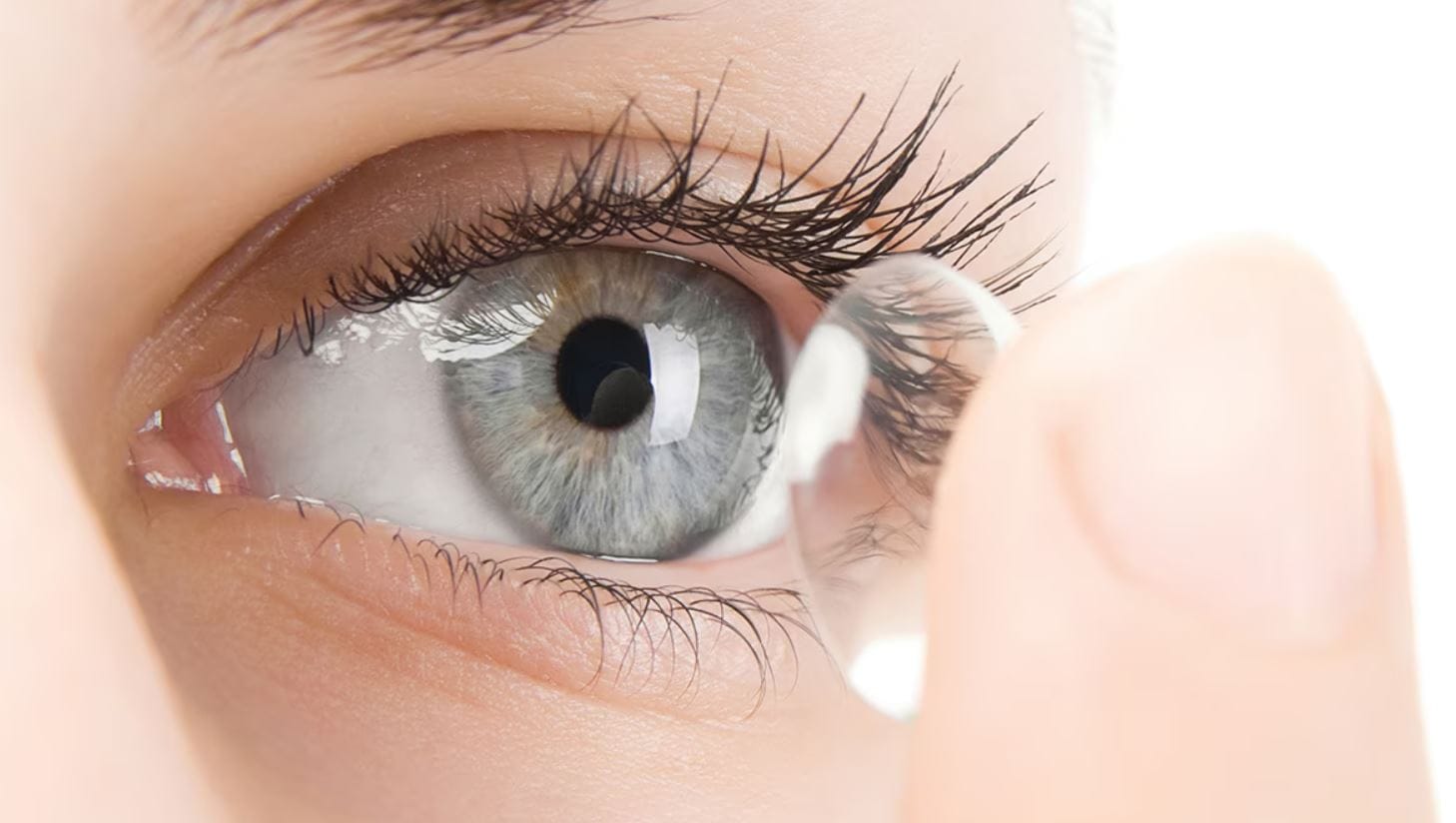
Kumari R, Singh L. Contact lens induced microbial keratitis: a case report. Series Clin Biomed Res. 2025;2(1):1-3.
Bacterial keratitis is a serious and potentially sight-threatening complication most commonly associated with overnight contact lens wear. This case report presents the management of a 22-year-old male patient who developed bacterial keratitis following non-compliance with recommended contact lens care practices, specifically sleeping in contact lenses. The report discusses the diagnosis, differential diagnosis, and treatment, along with the risk factors associated with contact-lens-related microbial keratitis (CLMK). Early intervention with fortified antibiotics and patient education led to a quick resolution of the condition. This case emphasizes the importance of proper contact lens hygiene and the timely treatment of bacterial keratitis to prevent visual impairment.
Article DOI: 10.54178/2997-2701.v2i1a2002

Adaki AY. Health system dynamics and women's family planning decisions in Taraba state. Series Clin Biomed Res. 2024;1(3):1-12.
Family planning plays a crucial role in maternal and child health, population control, and women's empowerment. However, despite efforts to promote family planning services, the uptake of modern contraceptive methods in Taraba State remains low. This study examined the various health system factors that influence women's family planning decisions in Taraba State. To achieve these objectives, the study employed a multi-stage and random sampling technique to gather information from 889 respondents within the childbearing age (15–49 years). The data were analyzed using descriptive statistics like percentages, graphs, and charts while Pearson Correlation was used to ascertain the strength of the relationship between the variables of the study. The findings reveal robust positive correlations between healthcare provider advice, quality of care, accessibility, and information/education received with women's family planning decisions. Conversely, a moderate positive correlation was observed between government policies/regulations and these decisions. Notably, healthcare provider advice and quality of care emerged as significant influencers, stressing the crucial role of healthcare professionals and the importance of maintaining high-quality care standards. Moreover, the study highlights the imperative of accessible and well-equipped family planning facilities, health education, and accurate information dissemination for informed decision-making. The study recommended that addressing the availability, quality of care, accessibility, information, and policies is essential to empower women and improve their reproductive health outcomes.
Article DOI: 10.54178/2997-2701.v1i3a2001

Rojhun R. Concept of mind according to Samkhya yoga in light of recent findings in neuroscience. Series Clin Biomed Res. 2024;1(3):1-8.
Article DOI: 10.54178/2997-2701.v1i3a2000
Petrovic DJ. The role of diffusion-weighted images in the evaluation of complex watershed infarctions: clinical image. Series Clin Biomed Res. 2024;1(2):1-3.
Article DOI: 10.54178/2997-2701.v1i2a1999
Johnson Taiwo I, Abdullahi H, Ahmed Kayode AM, et al. Assessment of dietary intake and nutritional status of children (0-23 Months) accessing care in community infant and young child feeding (C-IYCF) practices in Hasiya Bayero Pediatric Hospital Kano. Series Clin Biomed Res. 2024;1(2):1-20.
Introduction: Infant and young child feeding (IYCF) practices have substantial outcomes for the growth, development, and survival of infants and children during the first two years of age and throughout their lifetime. The study aimed to assess the dietary intake and nutritional status of children (0–23 months) registered for care in Hasiya Bayero Pediatric Hospital Kano.
Methodology: A cross-sectional study was conducted among 125 randomly selected caregiver-child pairs accessing care in the hospital. A validated semi-structured questionnaire was used to collect information on socio-demographic and dietary intake information from the respondents. Anthropometric indices of weight for age, length for age, and weight for length measurements were used to assess the nutritional status of children.
Result: Female caregivers were the most participants in this study 122 (98.2%). For marital status, almost all 124 (99.4%) of the mothers were married and only 1 each of the mothers reported to be single and being widowed. About 76 (60.8%) of the study population attended secondary education. The major occupation of the caregivers is trading in 92.4%. Dietary intake consists mainly of legumes in 30.0% and cereals in 56.5%. Only 39.0% portion of the population met the minimum World Health Organization (WHO) recommendation of dietary diversity and over 79.8% of the caregivers were still breastfeeding during the period of the study, 18% of them initiated breastfeeding within 1 h of birth and only 16.2% exclusively breastfed their children; majority 70.6% of the caregivers breastfed on demand while with a small proportion of 26.1% and 3.3% responded to breastfeeding when convenient and breastfeeding at a scheduled time respectively.
Conclusion: The study revealed that the nutritional status of the children was poor. Up to 60 (51.2%), 98 (88.3%), and 74 (65.1%) of the infants were wasted, underweight, and stunted, respectively. The study also revealed that the nutritional status of the children (WLZ, WAZ, and LAZ) was significantly related to the dietary diversity at p = 0.002, p = 0.001, and p = 0.019, respectively. This study revealed poor IYCF practices in Hasiya Bayero Pediatric Hospital Kano. Therefore, more attention needs to be paid to the specific behaviors surrounding feeding practices and other constraints to children accessing care in Hasiya Bayero Pediatric Hospital Kano.
Article DOI: 10.54178/2997-2701.v1i2a1998